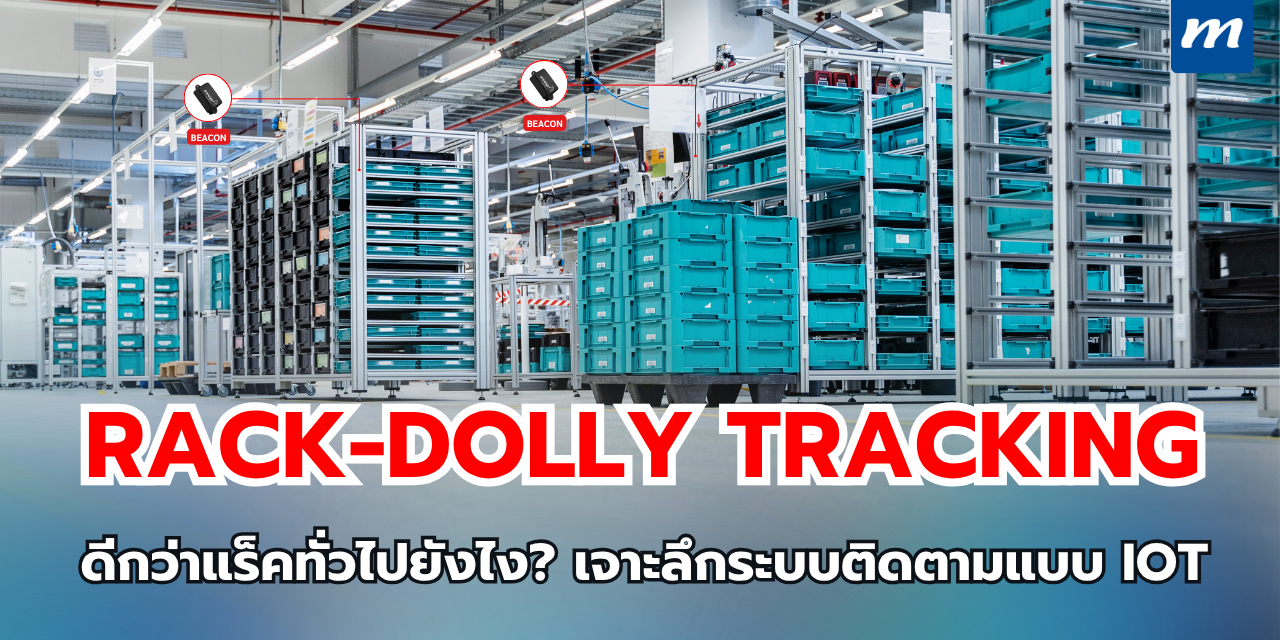
How Is Rack-Dolly Tracking Better Than Traditional Racks? An In-Depth Look at IoT-Based Tracking Systems
Today’s businesses demand speed, transparency, and efficient cost control. Racks and dollies used for moving goods within warehouses or between factories have become increasingly valuable and critical assets. However, many organizations still face common challenges—loss, lack of traceability, underutilization, and the inability to track locations in real time. This is where Rack-Dolly Tracking Systems come into play. By integrating IoT (Internet of Things) technology, traditional racks are transformed into “smart racks” that can be accurately tracked and efficiently managed.
What is Rack-Dolly Tracking?
Rack-Dolly Tracking is a real-time location tracking system for racks or dollies, utilizing IoT technologies such as GPS, Bluetooth, RFID, or NB-IoT / LTE-M networks to transmit location data to a centralized platform.
Users can instantly access and monitor data through a dashboard, such as
-
- Current location
- Movement history
- Number of active racks in use
- Equipment circulation
Problems with Traditional Racks
Before understanding how tracking systems offer advantages, let’s take a look at the limitations of traditional racks.
❌ 1. No Location Tracking Capability
Racks are moved across multiple locations—such as factories, customer sites, or warehouses—but there is no system to identify their exact location.
❌ 2. Unnoticed Loss or Misplacement
Many organizations lose a significant number of racks without the ability to verify or trace themย้อนหลัง.
❌ 3. Underutilization of Assets
Organizations may have a large number of racks, but lack visibility into how many are actually in use—leading to unnecessary additional investments.
❌ 4. No Access to Historical Data
There is no usage data available—such as who used it, when it was used, or how frequently it circulates.
How Is Rack-Dolly Tracking Better?
Integrating IoT into rack management significantly enhances operational efficiency and control.
✅ 1. Real-Time Location Tracking
Instantly know where each rack is reducing search time and improving operational efficiency.
✅ 2. Reduce Asset Loss
Set up alerts when racks move outside designated areas (geofencing), helping prevent asset loss.
✅ 3. Improve Utilization Efficiency
Gain visibility into actual rack usage, enabling more accurate procurement planning.
✅ 4. Advanced Data Analytics
You can access historical data, such as
-
- Usage frequency
- Circulation cycle
- Duration of racks at customer locations
✅ 5. Reduce Long-Term Costs
Reduce unnecessary rack purchases and minimize costs caused by asset loss.
IoT Technologies Behind the System
Rack-Dolly Tracking is not just a standard GPS system—it integrates multiple technologies into one solution.
🔹 GPS Tracking
Used for outdoor location tracking, such as transportation between factories.
🔹 Bluetooth / Beacon
Suitable for indoor tracking, such as within warehouses.
🔹 NB-IoT / LTE-M
Energy-efficient network with long battery life, lasting for several years.
🔹 Cloud Platform
Collects and displays data through a dashboard, allowing users to access it from anywhere.
Real-World Use Cases in Business
Rack-Dolly Tracking systems can be applied across various industries, such as
-
- Logistics and Transportation
- Automotive Manufacturing
- Warehousing
- Retail and Supply Chain Businesses
Why Do Modern Organizations Need Rack-Dolly Tracking?
In a world where data is the core of business, relying on traditional racks without tracking systems is like being “blind” to your own assets.
Rack-Dolly Tracking enables you to
-
- Gain full visibility of every rack movement
- Reduce costs and minimize losses
- Improve operational efficiency
- Make decisions based on real data
Learn more or place your order at www.monogps.com , supported by our professional MonoGPS team ready to provide consultation, system design, and full support for your rack and dolly tracking system 24/7. Contact us today at +66 38-118-681 to elevate your rack management—reduce losses, improve efficiency, and gain precise cost control.
 English
  Thai
Thai